


For overseas buyers, selecting organic flour is not simply a matter of comparing prices. Protein content, gluten strength, ash content, water absorption, particle size and flour stability can all influence the quality of the finished product.
To help customers choose suitable flour before placing a bulk order, Linyi Kanglu Whole Grain Flour Co., Ltd. provides a structured sample testing and formula confirmation process. This allows buyers to evaluate the flour under their own production conditions and reduces purchasing risks.
1. Understanding the Customer’s Application
The first step is to understand how the customer intends to use the flour.
Different finished products require different flour characteristics. Bread flour normally requires suitable gluten strength and fermentation performance, while noodle flour may need good elasticity, color and cooking stability. Flour for biscuits, cakes and other bakery products may require lower protein content and a softer texture.
Information Confirmed Before Sample Preparation
Before preparing samples, our team communicates with the customer to confirm:
Intended application
Required protein range
Moisture and ash requirements
Gluten strength
Desired flour color and particle size
Water absorption requirements
Packaging specifications
Destination-market documentation requirements
If the customer already has a technical specification sheet, our team reviews each item before recommending a suitable product or formulation.
2. Selecting the Suitable Organic Flour
Based on the customer’s application and technical requirements, we select the appropriate organic wheat flour as the starting point.
Available options may include organic whole wheat flour, organic refined wheat flour and customized flour blends. The final recommendation depends on the raw materials, milling process and performance required in the customer’s finished product.
When a standard product cannot fully meet the application requirements, the formula may be adjusted according to the available production and quality-control conditions.
3. Laboratory Sample Preparation
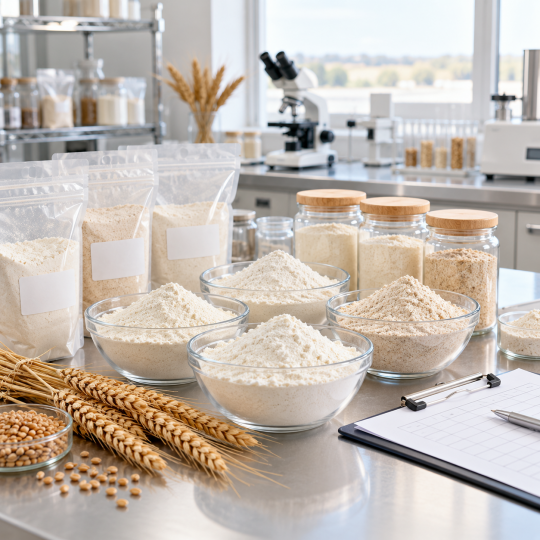
After the basic specifications have been confirmed, representative flour samples are prepared for evaluation.
Each sample is identified to maintain traceability. Information such as the flour type, sample code, production date and relevant test data can be recorded for comparison.
Several sample options may be prepared when the customer needs to compare different protein levels, flour colors, particle sizes or application results. This helps the buyer select a suitable product based on actual testing instead of relying only on a general product description.
4. Quality Indicator Testing
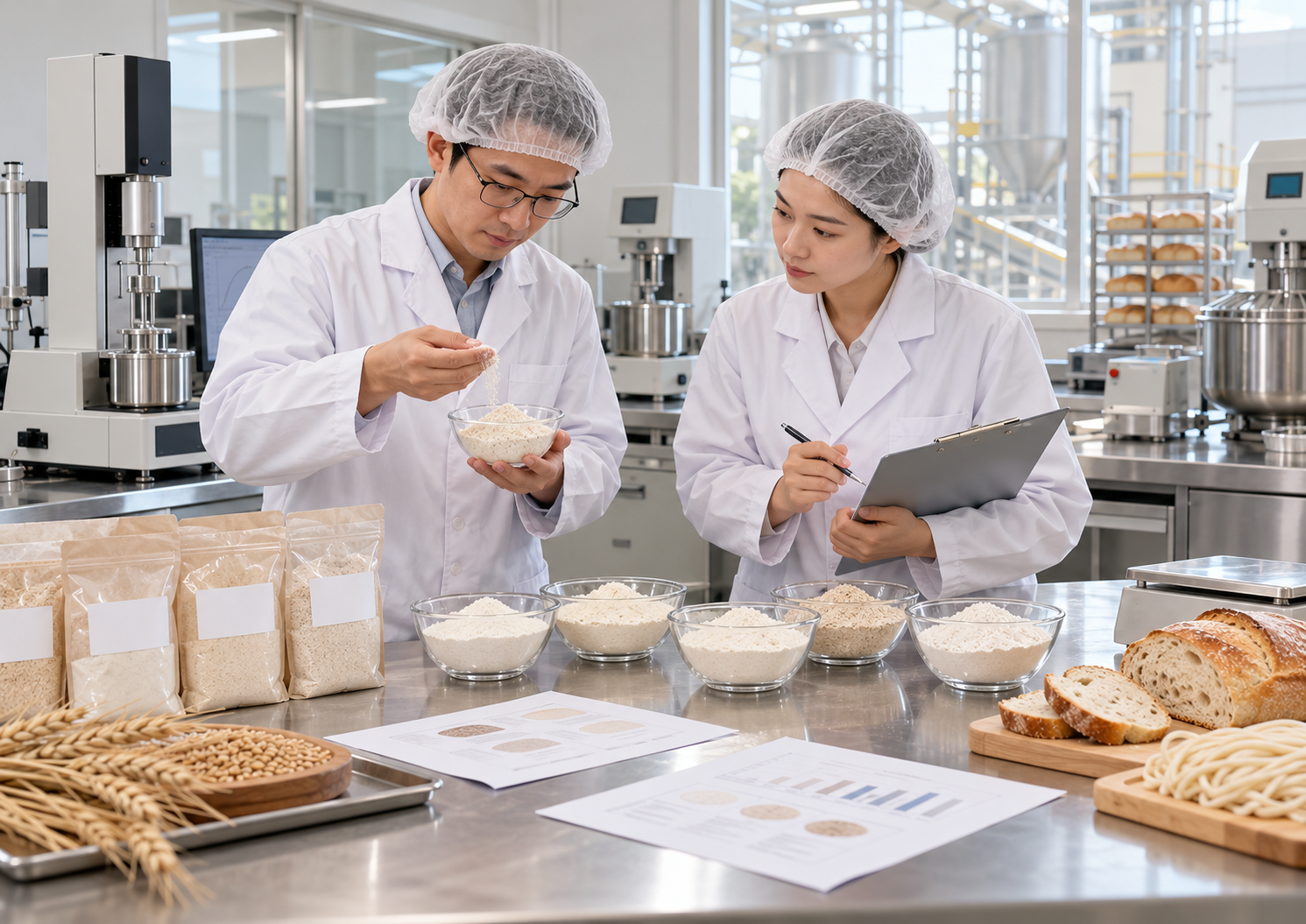
Before the samples are sent, the flour can be evaluated according to the agreed requirements.
Main Testing Items
Depending on the product and the customer’s requirements, the testing items may include:
Moisture content
Protein content
Wet gluten content
Ash content
Flour fineness
Color and appearance
Odor and sensory condition
Water absorption
Dough performance
Relevant microbiological indicators
Testing items and acceptable limits should be confirmed according to the product application, contract requirements and regulations of the destination market.
5. Application Testing
Laboratory data is important, but the actual performance of the flour in the finished product is equally important.
Buyers are encouraged to conduct application tests using their own recipes, equipment and production conditions. The same flour may perform differently when the water ratio, mixing time, fermentation process, baking temperature or processing equipment changes.
Recommended Evaluation Items
During application testing, the customer may evaluate:
Dough formation and handling
Water absorption
Fermentation stability
Product volume and internal structure
Noodle elasticity and cooking performance
Biscuit or cake texture
Color, aroma and taste
Finished-product storage performance
These results provide a practical basis for determining whether the flour is suitable for commercial production.
6. Customer Feedback and Formula Adjustment
After the customer completes the application test, our team collects detailed feedback.
Instead of receiving only a simple “suitable” or “not suitable” response, we encourage customers to describe the actual test results. For example, the dough may be too soft, water absorption may be lower than expected, or the finished product may require a lighter color.
Based on this feedback, our technical and production teams evaluate whether an adjustment is needed. A revised sample can then be prepared for further testing.
This process helps both parties understand the actual production requirements and improves the accuracy of the final product selection.
7. Final Sample Confirmation
Once the customer approves the flour’s performance, the confirmed sample and technical requirements become the reference for future production.
Items Confirmed Before Production
Final flour type or formula
Agreed technical indicators
Product appearance and sensory requirements
Packaging type and bag weight
Label information
Testing and documentation requirements
Storage and transportation conditions
A retained sample may be kept as a reference for production and quality comparison.
8. From Sample to Bulk Production
Before bulk production begins, the confirmed specifications are communicated to the production and quality-control teams.
Raw materials, milling parameters and finished-product indicators are controlled according to the approved requirements. Samples from the production batch may also be tested and retained to support traceability and consistency management.
For long-term orders, maintaining stable raw materials and production processes is especially important. If the customer changes the recipe, equipment or target market, the flour requirements should be reviewed again.
9. Information Buyers Should Provide
To improve the accuracy of product recommendations and sample preparation, buyers are advised to provide:
Product application
Target technical specifications
Current flour problems
Required sample quantity
Expected packaging
Destination country or region
Required testing documents
Applicable organic certification requirements
Clear information can shorten the product-selection process and reduce unnecessary repeated testing.
10. Organic Certification Requirements
Organic certification requirements vary between markets. Buyers should confirm the organic standard and import documents required by the destination country before ordering.
Our factory currently holds applicable Chinese organic certification. If the destination market requires EU Organic, USDA Organic or another international certification, the certification requirement must be reviewed and confirmed separately before an order is placed.
We do not use unverified certification claims. All certification information is confirmed according to the actual certificates and their valid scope.
11. Work with an Experienced Organic Flour Manufacturer
Linyi Kanglu Whole Grain Flour Co., Ltd. specializes in the production and supply of organic flour and grain-based flour products.
We support overseas buyers with product selection, sample preparation, technical communication, customized specifications, packaging confirmation and production quality control.
Our goal is to help customers identify suitable flour before bulk purchasing and establish a stable, practical and mutually beneficial supply relationship.
Request an Organic Flour Sample
If you are looking for organic wheat flour for bread, noodles, bakery products or food manufacturing, please send us your application and technical requirements.
Our team will review your specifications, recommend a suitable product and prepare samples for evaluation before bulk production.
